I lived there, hungered, but, survived
Я там жив, голодав та не згас
I lived there, hungered, but, survived
Я там жив, голодав та не згас

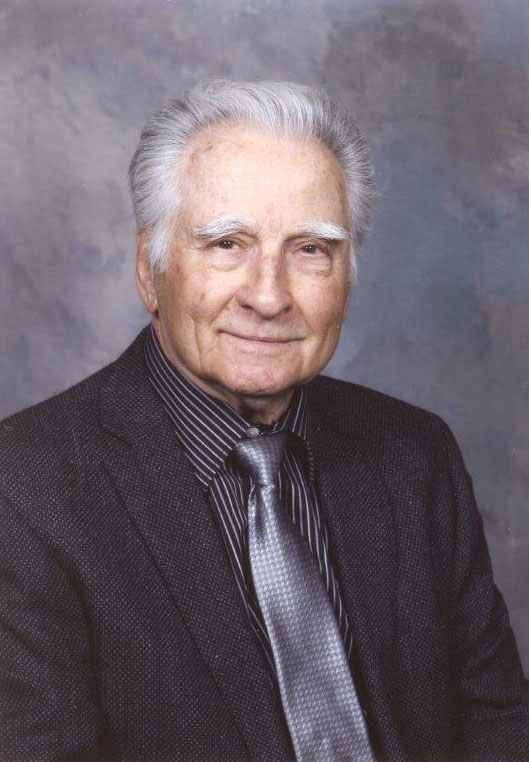
Leonid Mykyta Korownyk, or simply “Leo” as many knew him, was born in 1930 in Pochyno-Sofijivka in the Dnipropetrovsk region of Ukraine.
His earliest memories were of the struggles and pain his family endured in the “communist paradise” inflicted upon the Ukrainian nation after World War I. Then came the Holodomor. He described the Holodomor as “a serpent that slithered into his family” and devoured many. But God granted him his life, and he not only survived but thrived and triumphed over the many challenges he faced.
World War II thrust new struggles upon the family. Like several millions of Ukrainians and other Eastern Europeans, the Korownyks joined the masses seeking salvation from the evils of communist oppression and Nazi terror. They began an unknown and arduous trek that would eventually lead them to freedom. The family found its way to a displaced persons (DP) camp at Warner Kaserne, near Munich, Germany. Leonid started attending a Baptist Church where he learned of the opportunity to emigrate to Canada and study at the Ukrainian Baptist Institute in Saskatoon. These were his first steps to earning an education and achieving his professional and personal dreams.
After arriving in Canada during the winter of 1948-1949, Leonid completed his education, became a pastor for the Baptist Church, married, started a family. In addition to his pastoral work, Leonid developed professional skills that led to a long career at the Northern Alberta Institute of Technology where he worked until his retirement in 1994.
Leonid was fascinated by poetry. He became a wordsmith extraordinaire with a passion for words, language and expression that are hallmarks of his many poems. He chose to write about his faith and heritage, about Ukraine and its historic struggle for independence. He celebrated the genius and impact of Taras Shevchenko on the Ukrainian identity.
But it was the Holodomor in Leonid’s poetry that is dominant. He wrote about the Holodomor to honour the memory of those who suffered unspeakably and did not survive. He was committed to recording his testimony and preserving the truth about this genocide the Kremlin worked so hard to erase from memory and history.
Leonid dedicated his life and talents to preserving the truth about the Holodomor. He often met with students and young people to share his testimony with them. This was his way to honour the innocent victims of the Holodomor and share this knowledge with a younger generation.
When Leonid Korownyk passed away March 1, 2024, he was the last known Holodomor survivor living in Edmonton, Alberta. He left an enormous treasury of knowledge and creativity about the truth of the Holodomor, his faith and the Ukrainian identity.
Leonid Mykyta Korownyk was born into the horror of the Holodomor. He dedicated his entire life to being a warrior for faith and truth. He not only survived but thrived and triumphed over the many challenges thrown before him.
The struggles and pain his family endured in the “communist paradise” inflicted upon the Ukrainian nation after World War I were seared into his earliest memories. In an autobiographical essay published in 2022 in Edmonton, he revealed how the desire to survive compelled his family to work in unimaginably difficult circumstances, always under the threat of extreme punishment or death by the communist regime. Their daily lives were a constant struggle to get by with the extraordinarily little they were permitted to have. He described the Holodomor as “a serpent that slithered into his family” and devoured many.
World War II heaped new struggles upon the family, and they faced impossibly difficult choices. Korownyk recalled his father’s words about the front line of World War II: “If we retreat with the front, live or not, but I will not live one day under the communists.” And so, the Korownyk family began the frightening, grueling escape that would eventually lead them to freedom.
As was the case for millions of other families, the Korownyks joined the masses seeking salvation from the evils of communist oppression and Nazi terror. Their arduous, circuitous journey took them through the Carpathian Mountains in Ukraine, through Romania, Hungary and finally to Germany where they hoped to find some semblance of calm. This hope was shattered when the family realized they faced forced repatriation to the USSR, a certain ticket to death or the gulag. With little to lose, the family jumped off a train destined for a repatriation camp. Thanks to some sympathetic locals who sheltered them, the family survived.
The Korownyk family found its way to Warner Kaserne, near Munich, Germany, a displaced persons (DP) camp. As in most DP camps, Ukrainian cultural life flourished and youth were allowed to obtain an education in a Ukrainian high school. Everyone dreamed of moving further, so learning a new language was imperative. In the Ukrainian high school, Korownyk learned about religion for the first time, a subject he had not been exposed to in the “Soviet paradise.” He began attending a Baptist Church, as his mother was of the Baptist faith. There he learned of the opportunity to emigrate to Canada and study at the Ukrainian Baptist Institute in Saskatoon.
In late 1948, he set out on another voyage, but this time willingly, with plans to achieve an education and a future in Canada. He arrived in the winter without warm clothes. A kindly local gentleman heard of his predicament and gave him money to buy a winter coat. Korownyk could not have guessed that a few years later this kind man would become his father-in-law.
Leonid Korownyk moved to Toronto for better opportunities. He worked as a laborer, completed high school in the evenings and studied daily at the Toronto Bible College. By 1955, he completed his studies, and most importantly became a Canadian citizen. An added blessing came when Hania (Anna) Woytuch accepted his marriage proposal.
The next several years began with Korownyk’s first assignment as pastor at the Ukrainian Baptist Church in Swan River, Manitoba. A pastoral assignment in Saskatoon followed, then came an assignment in Edmonton where he served as assistant pastor of the Ukrainian Baptist Church. At about that time he began his extensive translating work. He translated eight volumes of religious books, ensuring materials would be available in the Ukrainian language for use in Ukraine. He was extremely proud of this accomplishment.
A few years later, Korownyk secured employment at the Northern Alberta Institute of Technology (NAIT) and worked there until his retirement in 1994.
In his biographical essay, Leonid said he was fascinated by poetry and started to write. He wrote and published two volumes of poetry in 2003 and 2012. The works were primarily Christian poetry, reflective of his calling.
Leonid Korownyk was a wordsmith extraordinaire. His passion for words, language and expression are the hallmarks of his many poems. He could have written on any theme but chose to write about his faith and heritage. His expressive poetry also deals with Ukraine and its historic struggle for independence. He also celebrated the genius and impact of Taras Shevchenko on the Ukrainian identity.
However, the subject of the Holodomor in Korownyk’s poetry is both ubiquitous and dominant. He wrote about the Holodomor to honour the memory of those who suffered unspeakably and did not survive. He was committed to recording his testimony and preserving the truth about this genocide the Kremlin worked so hard to erase from memory and history.
А bilingual collection of his poetry was published in 2022 by the Edmonton Branch of the League of Ukrainian Canadians. That work, titled “I Lived There, Hungered, but Survived” (“Я Там Жив, Голодав Та Не Згас”), honours the memory of countless Holodomor victims.
For many years, Korownyk read one of his powerful poems at the annual Edmonton commemoration of the Holodomor. His words affirm that Holodomor is not just a historical fact or a statistic, but is a human calamity of unimaginable proportions, a demonic crime against humanity, the consequences of which cannot be erased. It is sad and significant that, even though many of his poems were written years ago, they mirror the tragic events happening now in Ukraine in 2025.
Anne Korownyk, Leonid’s wife of 66 years, shared four important words that describe her husband. The first is faith, and this is beautifully expressed in his poem “Contemplation” (“Роздуми”). The second is dedication to his family, his children, grandchildren and great-grandchildren. The third is appreciation for his adopted country, Canada. The fourth is lasting respect for his homeland, Ukraine. He was nourished by Ukraine’s history and language and was inspired by the Ukrainian nation and its people.
With the passing of Leonid Korownyk a Holodomor survivor, on March 1, 2024, the famine-genocide of 1932-1933 is one step closer to being entirely a matter for history books. The life story that Leonid Korownyk shared so unreservedly and generously with his family, friends, colleagues and school children was first-hand evidence of the genocide of the Ukrainian nation. Despite being a witness to these horrors, his faith in God was unquestionable and his commitment to preserving the truth about the Holodomor was unwavering. He accomplished a great deal with the life that God granted him.
Lidia M. Wasylyn
League of Ukrainian Canadian Women, Edmonton Branch